|
1
|
- DLF Fall Forum
- Albuquerque, NM
- November 17, 2003
|
|
2
|
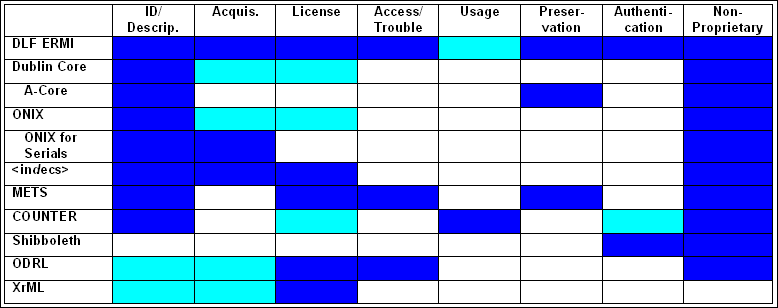
- 1. Background and E-Resource Management Functions
- 2. The DLF E-Resource Management Initiative
- 3. Impact, Challenges, and Next Steps
- 4. Questions and Comments
|
|
3
|
|
|
4
|
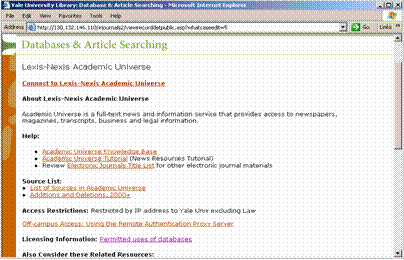
- High demand for �24x7� access
- E-resource budget shares continue to grow
- (mostly digital environment in 5 years?)
- Budget issues driving shift to e-only journal access
- Dynamic marketplace & business models
- �Google-ization� (make it easy or forget it!)
- E-resources are complex (to describe, fund, and support)
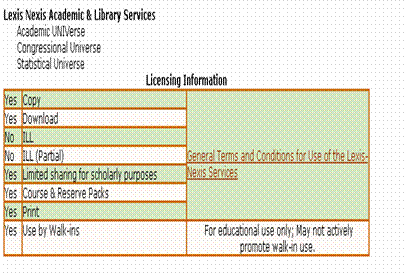
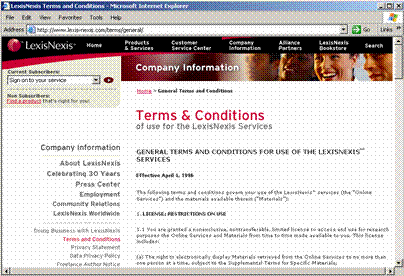
- Impact of licensing
|
|
5
|
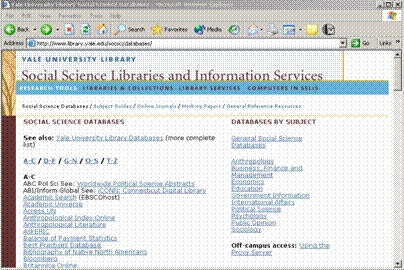
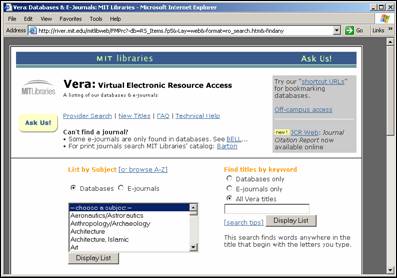
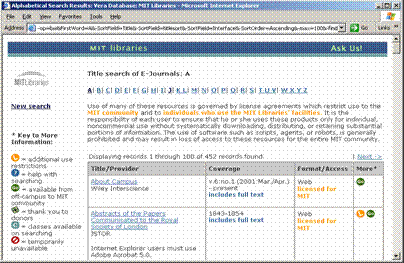
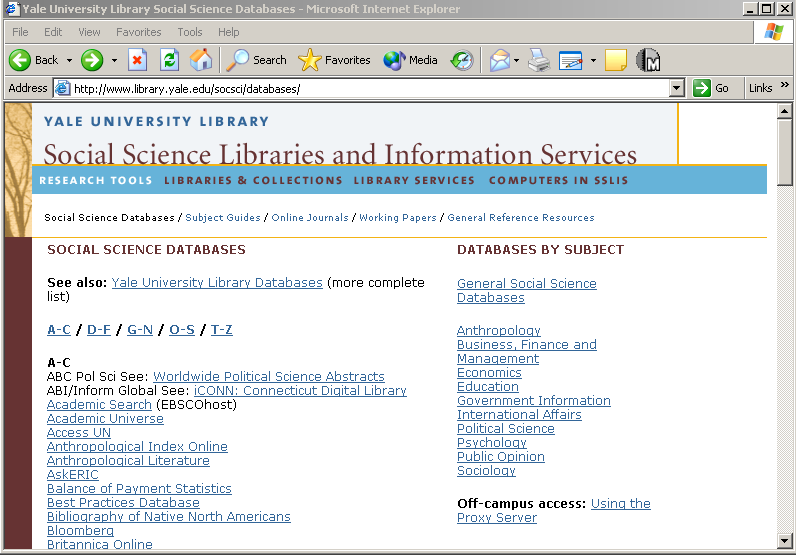
- Generating and maintaining alpha and subject lists
- Loading �aggregator� holdings information
- License term negotiation, tracking, and communication processes
- Wide staff involvement in selection & support
- Problem tracking
- Escalation/ triage paths
- Planned, cyclical product reviews
- Systematic usage reporting
- Result: creation of many separate documents and/or applications
|
|
6
|
- Adam Chandler (Cornell) and Tim Jewell
- Work begun for earlier DLF study
- Project descriptions and contacts
- Local documents
- Listserv
- (http://www.library.cornell.edu/cts/elicensestudy/)
|
|
7
|
- California Digital Library
- Colorado Alliance (Gold Rush)
- Columbia
- Griffith University (Australia)
- Harvard
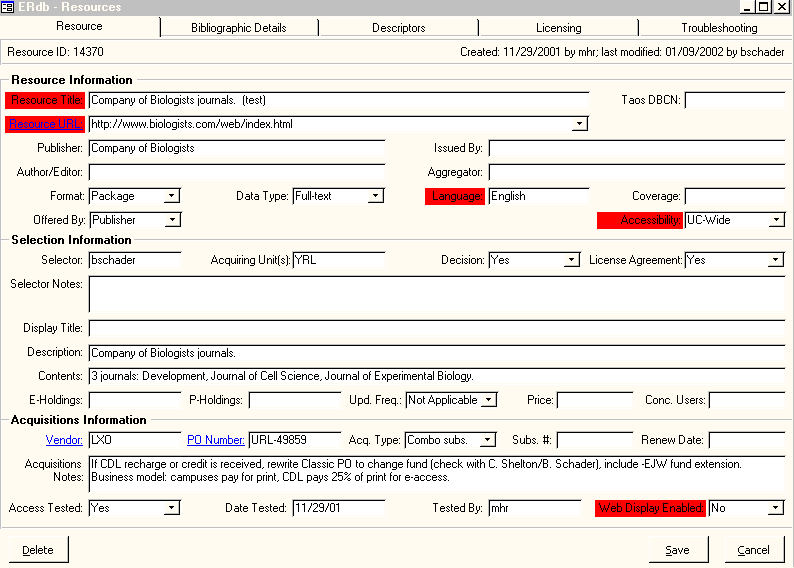
- Johns Hopkins (HERMES)
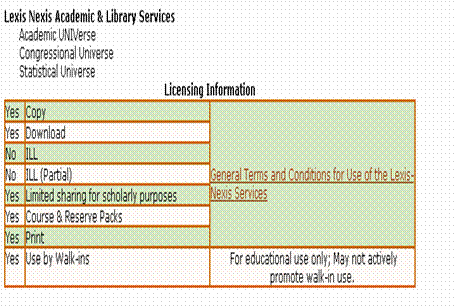
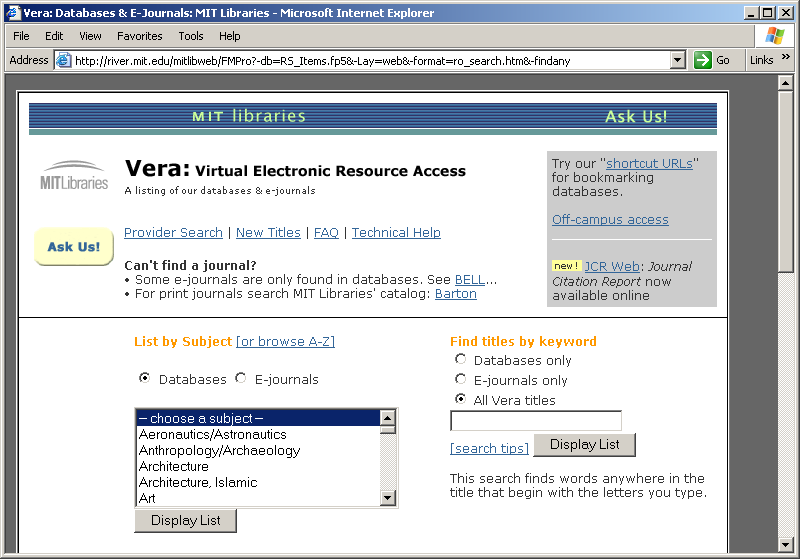
- MIT (VERA)
- Michigan
- Minnesota
- Notre Dame
- Penn State (ERLIC)
- Stanford
- Texas (License Tracker)
- Tri-College Consortium (Haverford, Bryn Mawr, Swarthmore)
- UCLA
- University of Georgia
- University of Washington (w/III)
- Virginia
- Willamette University
- Yale
|
|
8
|
|
|
9
|
- Tim Jewell (University of Washington)
- Ivy Anderson (Harvard)
- Adam Chandler (Cornell)
- Sharon Farb (UCLA)
- Angela Riggio (UCLA)
- Kimberly Parker (Yale)
- Nathan D. M. Robertson (Johns Hopkins)
|
|
10
|
- Formal
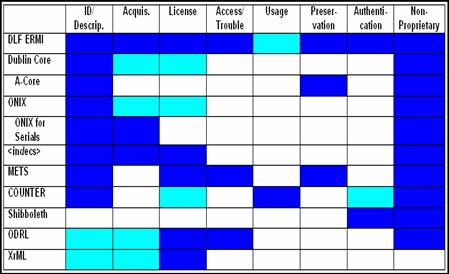
- Describe architectures needed
- Establish lists of elements and definitions
- Write and publish XML Schemas/DTD�s
- Promote best practices and standards for data interchange
- Informal
- Promote growth and development of vendor and local ERM systems and
services
- https://www.diglib.org/standards/dlf-erm02.htm
|
|
11
|
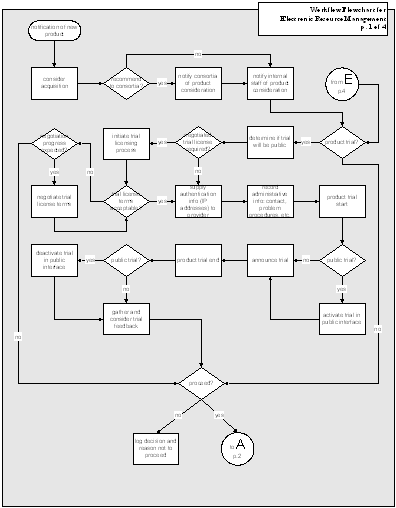
- Problem Definition/Road Map
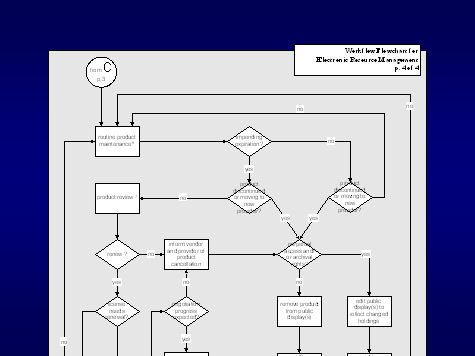
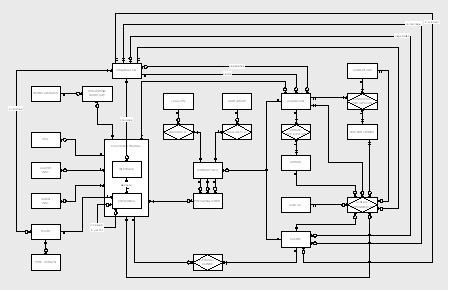
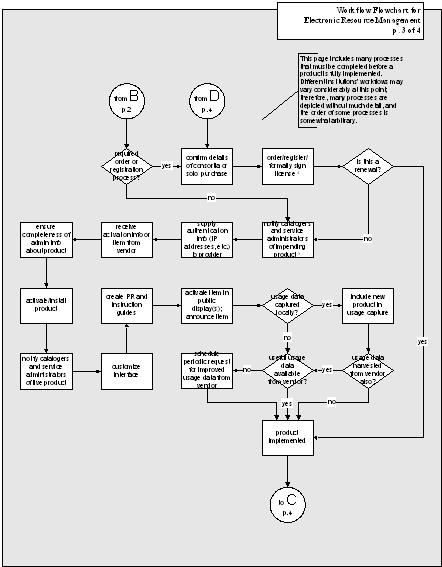
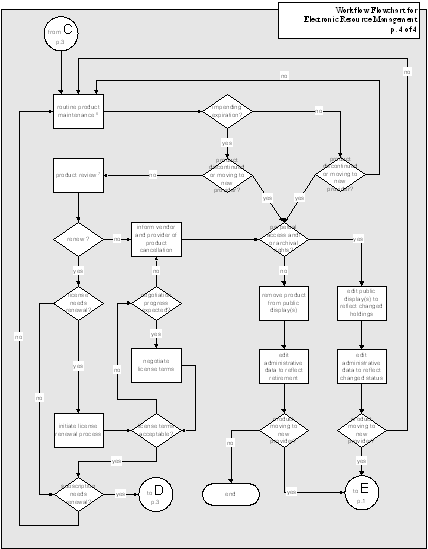
- Workflow Diagram
- Functional Specifications
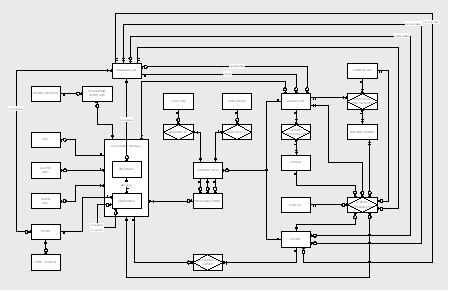
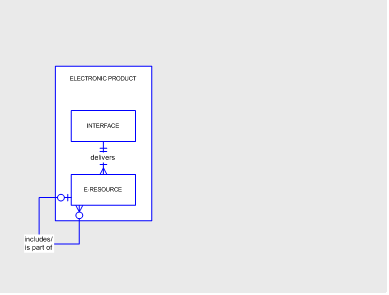
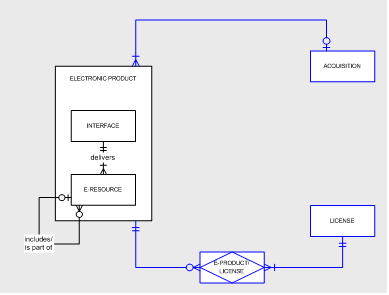
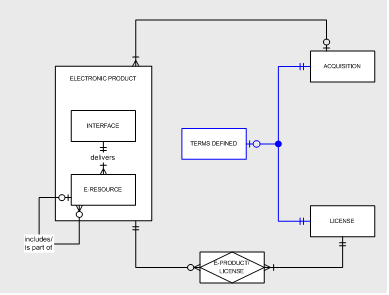
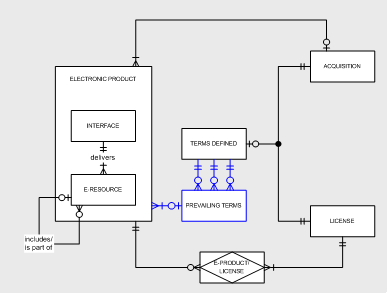
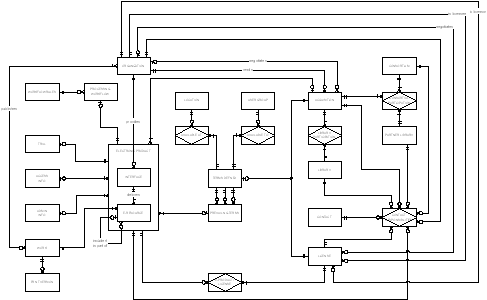
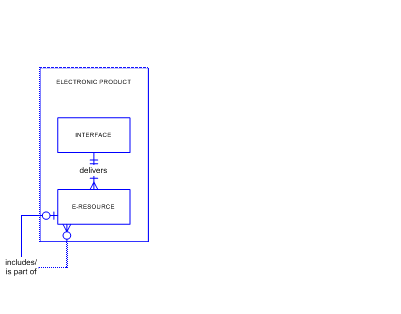
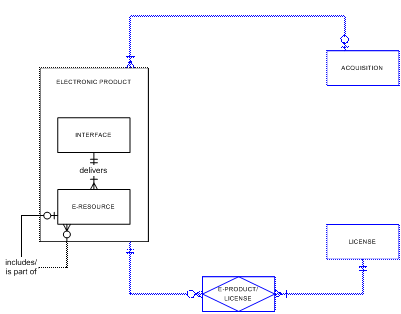
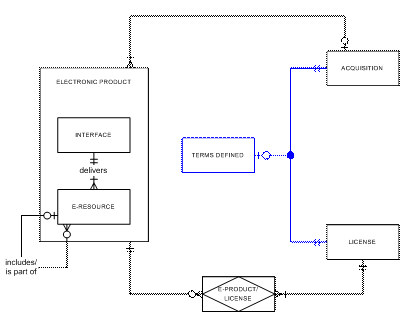
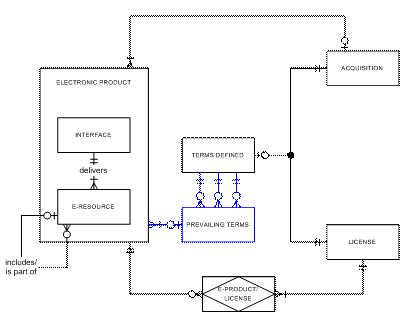
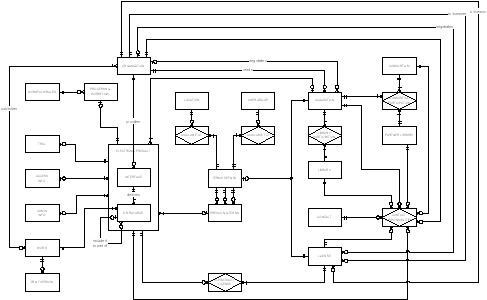
- Entity Relationship Diagram
- Data Elements and Definitions
- XML Schema
|
|
12
|
- Problem Definition/Road Map
- �System Survey�
- Help understand scope of need, options
- Final Project Report
- What did we do, how far did we get, and what�s unresolved?
- Begin defining next steps
- Workflow Diagram
- Internal analysis and planning
- Functional Requirements
- Define details of needed functionality for:
- Local and Vendor system planning
- Source for RFP�s
|
|
13
|
- Entity Relationship Diagram (�Tree�)
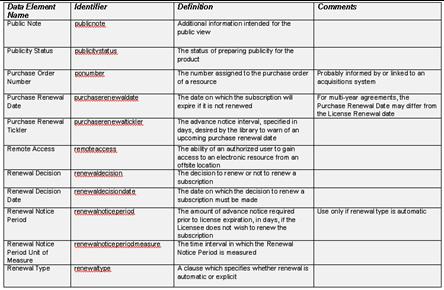
- Data Elements and Definitions
- Data Element Dictionary (�Leaves�)
- Data Structure (�Where the Leaves Go�)
- Accelerate development processes
- XML Investigation
- Foster data interchange for
- Future data migration
- Vendor to Library data interchange
- Library to Library data interchange?
|
|
14
|
|
|
15
|
- Bob Alan (Penn State)
- Angela Carreno (NYU)
- Trisha Davis (Ohio State)
- Ellen Duranceau (MIT)
- Christa Easton (Stanford)
- Laine Farley (CDL)
- Diane Grover (Washington)
- Nancy Hoebelheinreich (Stanford)
- Norm Medeiros (Haverford)
- Linda Miller (LC)
- Jim Mouw (Chicago)
- Andrew Pace (NCSU)
- Carole Pilkinton (Notre Dame)
- Ronda Rowe (Texas)
- Jim Stemper (Minnesota)
- Paula Watson (Illinois)
- Robin Wendler (Harvard)
|
|
16
|
- Tina Feick (SWETS Blackwell)
- Ted Fons (Innovative Interfaces)
- David Fritsch (TDNet)
- Kathy Klemperer (Harrassowitz)
- George Machovec (Colorado Alliance)
- Mark Needleman (SIRSI)
- Oliver Pesch (EBSCO)
- Chris Pierard (Serials Solutions)
- Kathleen Quinton (OCLC)
- Sara Randall (Endeavor)
- Ed Riding (Dynix)
- Jenny Walker (ExLibris)
|
|
17
|
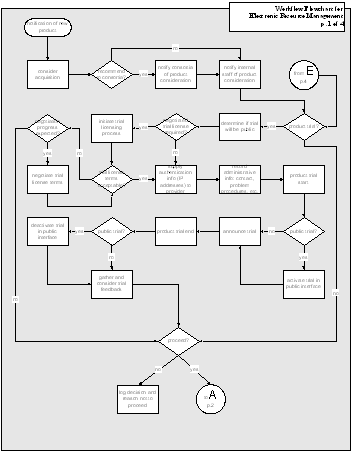
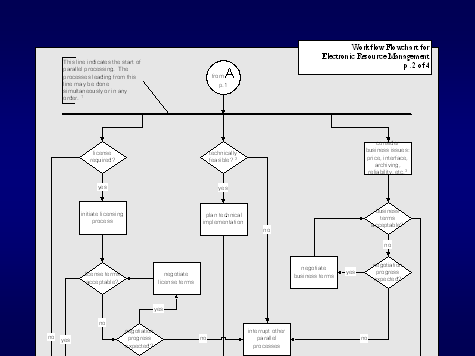
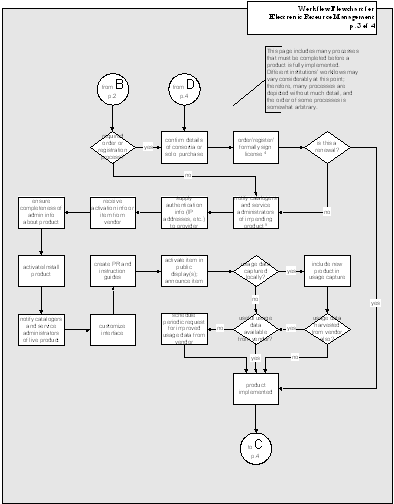
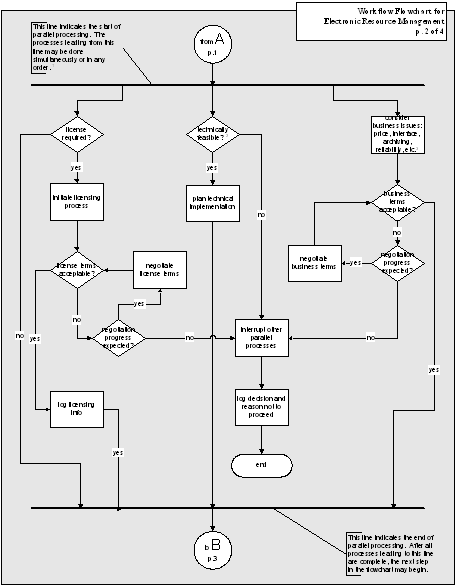
- Contemplating Product Selection
- Initial Review (3 �parallel processes�)
- License
- Technical Feasibility
- Business Issues
- Implementation
- Routine Maintenance/Renewal
|
|
18
|
|
|
19
|
|
|
20
|
|
|
21
|
|
|
22
|
- Based on specifications developed jointly by Harvard and MIT for
discussions with Ex Libris
- Introduction and Goals
- Guiding Principles
- Functional Requirements (47 main points)
- General (4)
- Resource Discovery (7)
- Bibliographic Management (2)
- Access Management (5)
- Staff Requirements (29)
- General interface requirements (4)
- Selection and evaluation processes (9)
- Resource administration and management (11)
- Business functions (5)
|
|
23
|
- Integrated environment for management and access
- Interoperation and/or exchange of data with existing services:� OPACs, web portals, library management
systems, link resolution services�
- Single point of maintenance for each data element
|
|
24
|
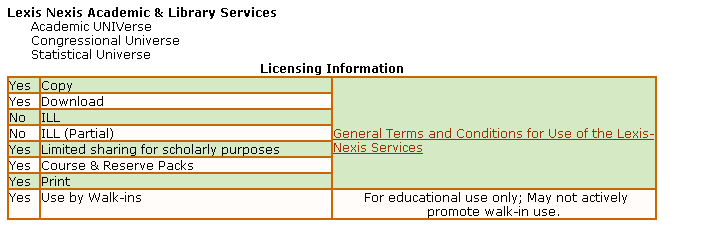
- 32. Store license rights and terms for reference, reporting, and control
of services
- 32.1 For services including but not limited to ILL, reserves, distance
education, course web sites, and course packs:
- 32.1.1 Identify whether a given title may be used for the service and
under what conditions
- 32.1.2 Generate reports of all materials that may or may not be used
for the service, with notes about conditions
|
|
25
|
- Represent relationships among individual e-resources, packages,
licenses, and online interfaces
- Associate characteristics of a license, interface, or package with the
resources to which it applies
- Provide robust reporting and data export capabilities
|
|
26
|
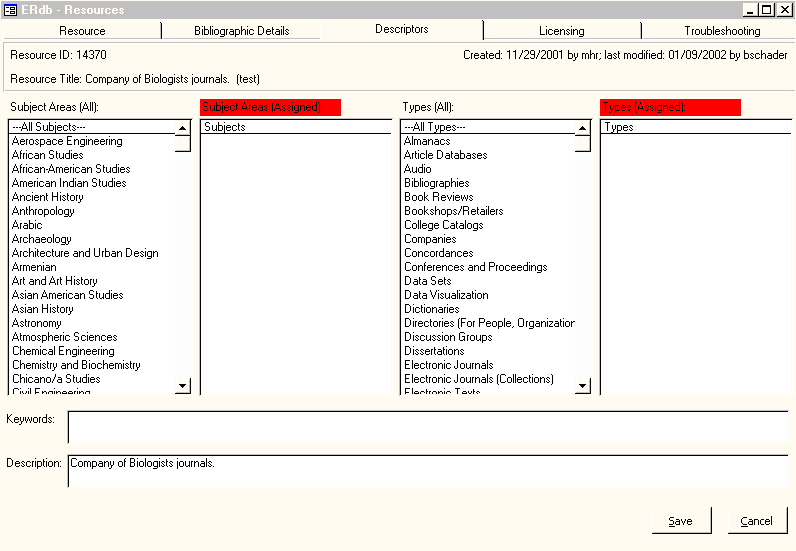
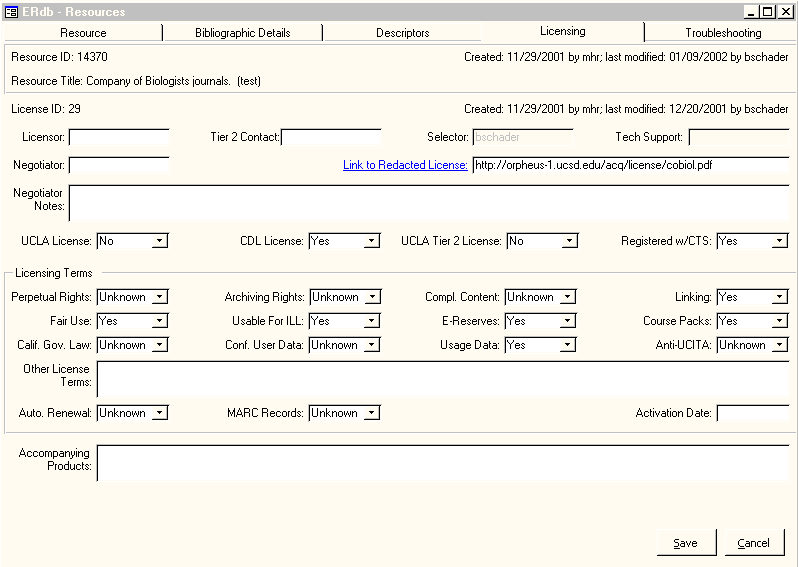
- Record license permissions and agreement metadata
- Authorized users
- Permissions and restrictions
- Obligations of the parties
- Administrative metadata
- Link to redacted license
- Support selection and acquisition workflows through customizable routing
and notification tools
|
|
27
|
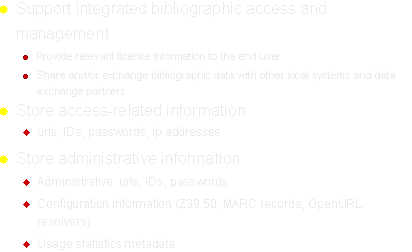
- Support integrated bibliographic access and management
- Provide relevant license information to the end user
- Share and/or exchange bibliographic data with other local systems and
data exchange partners
- Store access-related information
- urls, IDs, passwords, ip addresses
- Store administrative information
- Administrative� urls, IDs,
passwords
- Configuration information (Z39.50, MARC records, OpenURL resolvers)
- Usage statistics metadata
|
|
28
|
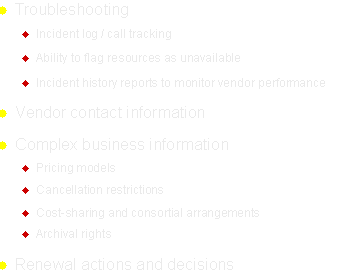
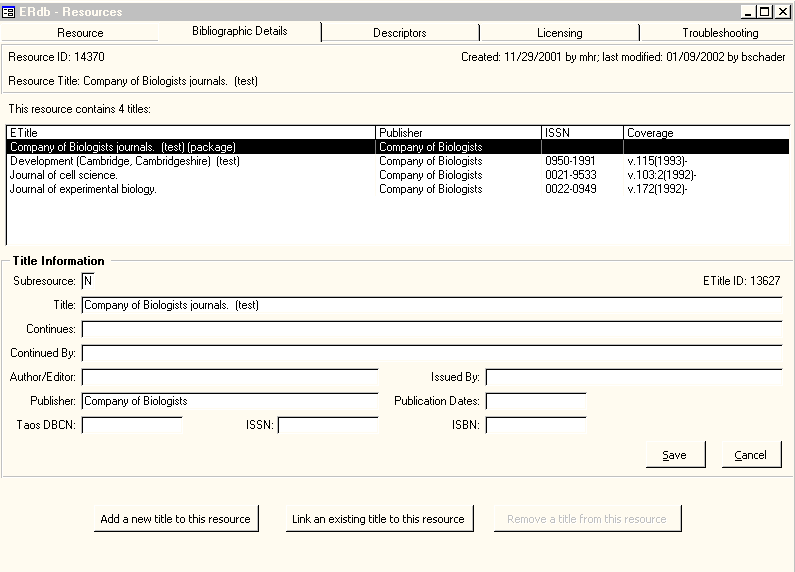
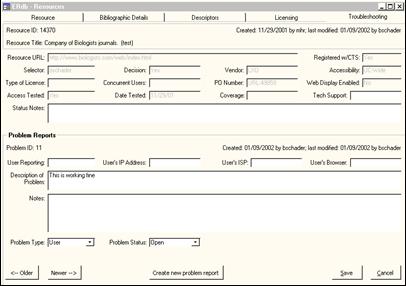
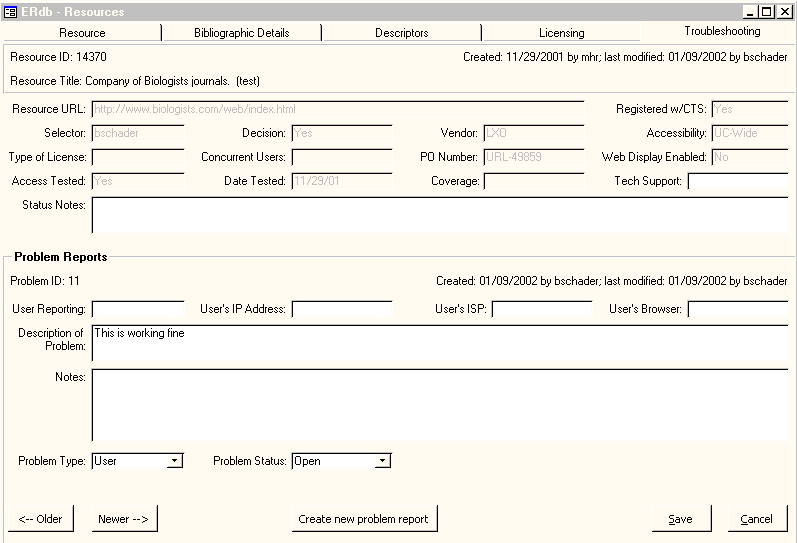
- Troubleshooting
- Incident log / call tracking
- Ability to flag resources as unavailable
- Incident history reports to monitor vendor performance
- Vendor contact information
- Complex business information
- Pricing models
- Cancellation restrictions
- Cost-sharing and consortial arrangements
- Archival rights
- Renewal actions and decisions
|
|
29
|
- Minimizing duplicative data among systems
- Which is the system of record?
- �Consistent information for the user regardless of the path taken�� --�
is this realistic?
- Appropriate locus of acquisitions functionality
- Usage statistics
- Access management
- Optional support for persistent URIs
- Functional integration with local access management environment (e.g.
proxy servers)
|
|
30
|
|
|
31
|
|
|
32
|
|
|
33
|
|
|
34
|
|
|
35
|
|
|
36
|
- Brief history
- Structural simplicity
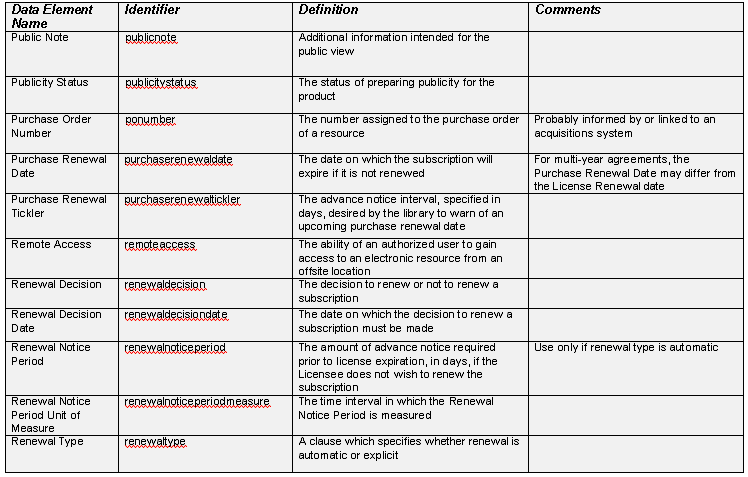
- Data Element Name
- Identifier
- Definition
- Comments
- Groundwork for Data Structure and ERD
|
|
37
|
|
|
38
|
- Overlap/integration with existing metadata schema
- ISO 11179
- Element names
- Defining complex concepts
- Exhaustibility/flexibility
- Recommending standards for element values
|
|
39
|
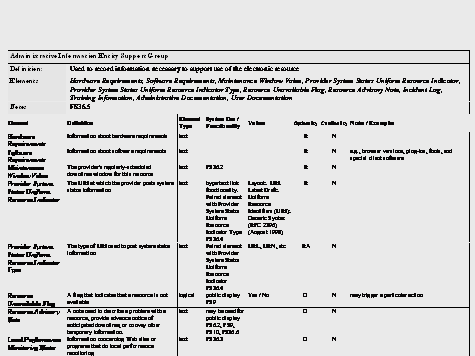
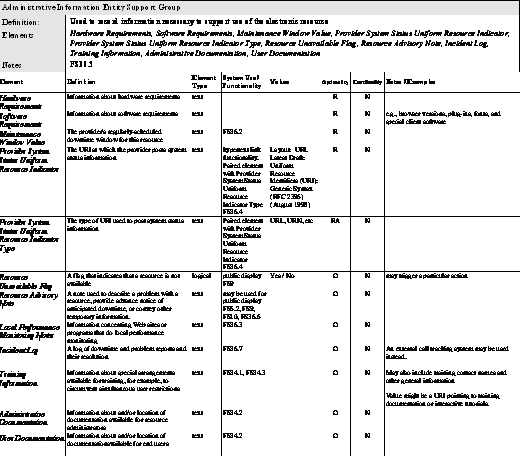
- ERD + DED --> ???
- Data Dictionary Elements
- plus entity identifiers
- plus pointers between entities
- Data Dictionary Definitions
- plus data types
- functionality
- optionality & cardinality
|
|
40
|
|
|
41
|
- Adam Chandler (Cornell University)
- Nancy Hoebelheinrich (Stanford University)
- Angela Riggio (UCLA)
- Nathan Robertson (Johns Hopkins)
- Robin Wendler (Harvard University)
|
|
42
|
- 1. Possible use case examples
- 2. Focused special attention on problem of formatting coverage data
- 3. Feasibility of XML schema to represent elements and entities
- 4. Next steps
|
|
43
|
- Link resolver data exchange between vendor and library. Possible
elements: title, title level coverage, user group license terms
- Publisher e-resource title list. Possible elements: title, package name,
title level coverage, discounts, issn
- Possible exchange of data between the library ERMS and other campus
systems such as course web sites?
|
|
44
|
- �METS escrow. To preserve
resources in an archive, it is necessary to know the license terms that
apply to objects. It would also be helpful to point to an image of the
full text of the license.
- Possible place for an XML schema to guide exchange of trial information
between vendors and libraries?
|
|
45
|
- �Imagine a web service between
libraries and vendors for reporting and communicating support incidents.
Both parties would then have a self archiving record of all
troubleshooting.
- Transmission of IP ranges to vendors and contact info to libraries
- Exchange license data with a contracting partner
|
|
46
|
- ERM requires a holdings / coverage schema that is:
- �Rich enough to accommodate
"routine" irregularities (supplements, indexes, unusual
numbering and chronologies)
- �Simple enough to facilitate easy
production and common adoption by libraries and vendors
- Interoperable with schemas in existing systems
- Current standards and methods seem to be either rich or simple, but not
both
|
|
47
|
- NISO to begin work on abstract holdings schema and corresponding XML
schema in early 2004. (Based on the Z39.50 schema, emphasizing
functionality, clarity, simplicity)
- Rather than develop yet another competing standard, we recommend
participation in the NISO development, and hope to adapt the resulting
XML schema to our needs
|
|
48
|
- �Robin has developed a
proof-of-concept schema that is available on the Web Hub.� It includes Dublin Core and MODS
namespace/schemas, with a slot for rights expression
|
|
49
|
- Continue recent conversation with Renato Iannella on how the Open
Digital Rights Language may be used to represent license terms
- �Create instance documents to
demonstrate possible use of the DLF ERMI base schema
- �Secondary product: further
refinement of our element set attributes
|
|
50
|
|
|
51
|
- Managing electronic resources over time creates unique challenges for
libraries of all types
- What functionality and metadata are required to support persistent
e-resource management?
- DLF project offers first comprehensive schema, data model and tools
specifically designed to address e-resources.
- What further work is necessary to guide or maintain development in this
area?
|
|
52
|
- Environment--highly dynamic, logarithmic growth, high cost,
multidimensional nature, complex relationships
- Hard to predict the future--plethora of business models
- Growing reliance and investment in e-resources with no guarantees re
digital archiving or persistent access
|
|
53
|
- No single global identification system
- No registry or authority list of identifiers, packages or providers
- Vocabulary issues
- Privacy and confidentiality re authentication
- Usage data--COUNTER, ARL e-metrics?
- Open v. proprietary standards
- Customization and standardization
- Interoperability of stand-alone ERM?
|
|
54
|
- Project wrap-up (by DLF Spring Forum)
- Project report
- System survey
- Cross-check existing documents
- Round out draft schema
|
|
55
|
- Market
- Continue to encourage vendor development
- III, ExLibris, Dynix, others at various stages of product development,
announcement, etc.
- Standards
- �Vet� parts of schema, etc. to different groups
- Determine future of schema as a standard
- Need �Maintenance Agency�?
- Other ideas--Come to BOF Tues. 4-6
- http://www.library.cornell.edu/cts/elicensestudy/home.html
|
|
56
|
- http://www.library.cornell.edu/cts/elicensestudy/home.html
|

 � Notes