|
1
|
- Jon W. Dunn and William G. Cowan
- Digital Library Program
- Indiana University
- DLF Fall Forum
- 27 October 2004
|
|
2
|
- EVIA: Ethnomusicological Video for Instruction and Analysis
- Partnership between Indiana University and University of Michigan
- Funding support from the Andrew W. Mellon Foundation
|
|
3
|
- Originated with ethnomusicologists
- Need for infrastructure to support ethnomusicology field video
- Two goals:
- Provide means for archiving video
- Provide access for use in teaching/learning and research
|
|
4
|
- Planning Phase 2001-2002
- Three meetings bringing together ethnomusicologists, archivists,
librarians, IT professionals, video professionals, intellectual
property experts
- Development Phase 2003-2005
- Goal: Build tools and set up infrastructure to digitize, annotate, and
provide access to total of 150 hours of video from 15 contributors
|
|
5
|
- Digitization, annotation process
- Tools for segmentation/annotation
- Preview of tools for access
- Future directions
|
|
6
|
|
|
7
|
- Video Segmentation and Annotation application
- Developed as Java application
- With Borland JBuilder
- Using an Oracle 9.2 database
- Runs in Microsoft Windows
- Uses QuickTime and QuickTime for Java
|
|
8
|
- Metadata is collected by the application and stored as XML documents
- METS 1.3 Schema
- Structural metadata (METS structmap)
- Container for descriptive and technical metadata
- Pointers to digital files
- MODS 3.0 Schema
- Collection descriptive metadata
- Video segment descriptive metadata
|
|
9
|
- Original tape from contributor
- Variety of formats, both analog and digital
- Dub to Digibeta tape
- Digibeta tape to 50 Mbps MPEG-2 digital file
- 50 Mbps digital file transcoded to MPEG-4 digital file
- 50 Mbps digital file stored in IU’s Massive Data Storage System
- Digibeta tape stored at IU Archives of Traditional Music (ATM)
- If collector chooses, original tape may be stored at ATM as well
|
|
10
|
- Size of 50 Mbps digital master file
- 10 - 15 gigs per hour of video
- 100 – 200 gigs per collection
- Effort to create transcoded file
- 8 hours per hour of video
- Includes: dubbing digibeta tape, MPEG-2 encoding, checksum generation,
transmission and transcoding
|
|
11
|
- June 9 – 19, 2004 at Indiana University
- Collaboration of ethnomusicologists, technicians, programmers,
catalogers
- Contributions of 10 hours of video from 11 ethnomusicologists spanning 4
decades of field work
- Ethnomusicologists segmented and annotated digital video, participated
in workshops, presented their results
|
|
12
|
- Predefined categories chosen by ethnomusicologists and catalogers
- Predefined values based on authority sources chosen by catalogers
- Predefined values stored in tables in Oracle database and available to
be selected in annotation application
- As needed, new values would be added by catalogers during the Summer
Institute
|
|
13
|
- Language
- Culture Group
- Geographic Location
- Genre
- Instruments
- Venue
- Theme
- Performance Type
- Participant and Participant Role
|
|
14
|
- Library of Congress Subject Headings
- MARC Code Lists for Relators
- Getty Art and Architecture Thesaurus
- Getty Thesaurus of Geographic Names
|
|
15
|
|
|
16
|
|
|
17
|
- Creation of initial METS XML file for each ethnomusicologist
- Basic Data
- Points to Transcoded Files on file server
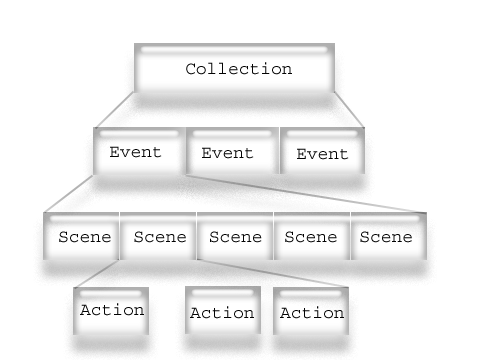
- Event segmentation
- Continuous video stream of all digitized video for the contributor
- Contributor Segments continuous video stream into significant events.
|
|
18
|
- Contributor now segments events into scenes and actions
- Open an Event
- Segment as Scene
- Descriptive text
- Controlled vocabulary
- Segment Scene into Actions
|
|
19
|
- EVIA Digital Archive Demo
|
|
20
|
- Web access to annotated video segments
- Storing and Retrieving XML Documents from Oracle 9.2 XDB (native XML
database)
- Indexing, searching and retrieving XML from the XDB
|
|
21
|
- A lot of effort to create digital video
- Need for clearly defined production processes and procedures
- Compromises on video formats
- Technical metadata collection and storage
- Evolving working relationships between scholars, librarians, archivists,
technologists, video engineers
|
|
22
|
- Tools and Technology
- Open Source METS/MODS Video Segmentation/Annotation Tool
- Field version of Segmentation/Annotation Tool
- Further work with native XML databases
- Integration into teaching/learning environments, course management
systems
- Sustainability
|
|
23
|
- Jon Dunn: jwd@indiana.edu
- Will Cowan: wgcowan@indiana.edu
- http://www.indiana.edu/~eviada/
|

 Notes
Notes