|
1
|
|
|
2
|
- NISO Z39.87-2002
- Relation to Automatic Exposure
- Status and revisions
- Automatic Exposure
- Brief introduction
- Investigations
- Leveraging available technologies
- Evaluation
- Next steps, new tools
|
|
3
|
- NISO Z39.87-2002 (AIIM 20-2002) [Draft Standard for Trial Use]
- In XML – MIX (NISO Metadata for Images in XML Schema)
- “First line of defense” against obsolescence
|
|
4
|
- Sections
- Basic image parameters record information crucial to displaying a
viewable image
- Image creation metadata records information crucial to understanding
the technical environment in which a digital image file was captured
- Imaging performance assessment metadata records information that allows
evaluation of the digital image’s quality, or output accuracy
- Change history metadata records information about the processes applied
to an image over its life cycle
- NISO Z39.87 [revisions as of 22 October 2004]
- 129 data elements
- 42 Mandatory / Mandatory if Applicable
|
|
5
|
- Original draft: TIFF-centric
- Now: more applicable to all still image formats, including JPEG2000
- Original draft: closed data value lists
- Now: future-proofing through open lists
- Original draft: only data dictionary, no data format
- Now: XML aware [XML Schema as Appendix (NOT part of standard)]
- Allows for embedded profiles, color maps, etc.
- Corrects some minor errors
|
|
6
|
- Overarching goal: Economic implementation of NISO Z39.87
- Minimize the cost of technical metadata acquisition
- Maximize the ability to ensure long-term access to digital images
- Initiative supported by
- Digital Library Federation (DLF)
- Museum Computer Network (MCN)
- For documents & updates
- http://www.rlg.org/en/page.php?Page_ID=2681
|
|
7
|
- What do we want?
- Capture mechanism: a host for the metadata
- Editing mechanism: a place to add metadata
- Export mechanism: a way to transfer metadata from the file to a
preservation database
- Leveraging existing specifications
- Available Metadata
- What technical metadata do we currently have access to?
- Mapping Z39.87 to TIFF, EXIF, JPEG 2000 (JPX)
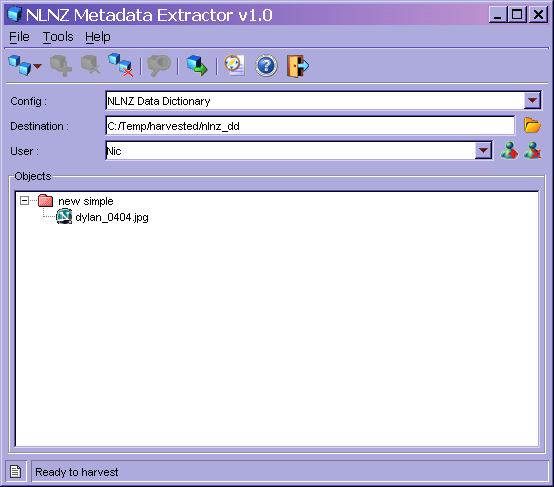
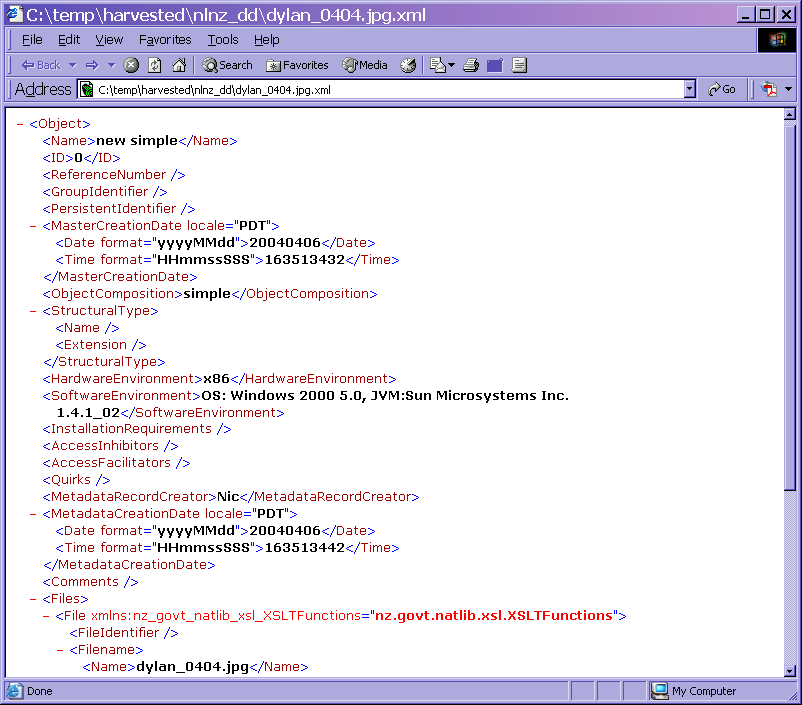
- Extraction Tools
- How can technical metadata be extracted for transfer into preservation
databases?
- Expanding to NISO Z39.87
- What mechanisms can we identify which could give us access to the
extractable NISO Z39.87 elements?
|
|
8
|
- TIFF (the present)
- Option 1: Technical metadata in fileheader tags
- Option 2: EXIF 2.2
- Extension of TIFF fileheader tags (JPEG/TIFF files)
- JPEG 2000 (the future)
|
|
9
|
|
|
10
|
|
|
11
|
- Community based
- JHOVE
- The JSTOR-Harvard Object Validation Environment
- National Library of New Zealand
- Industry based
- Eastman Kodak Picture Metadata Toolkit
- Adobe Extensible Metadata Platform (XMP)
|
|
12
|
|
|
13
|
|
|
14
|
|
|
15
|
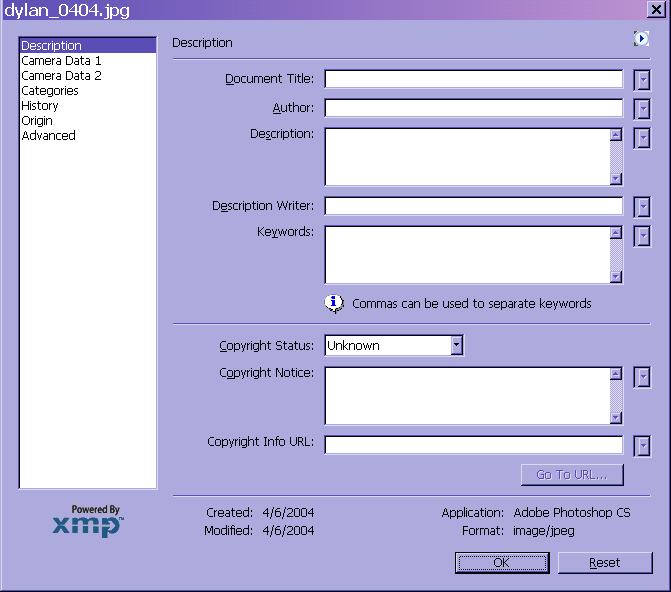
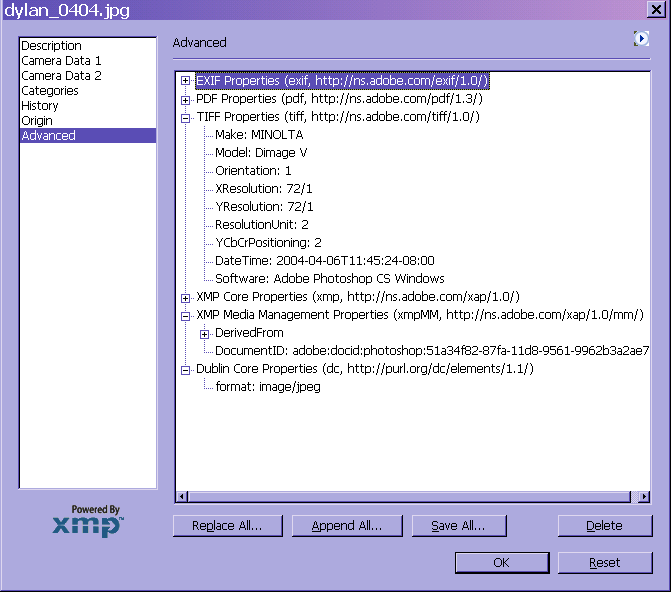
- Open-Source specification for sharing metadata across applications
- Extracts existing metadata (TIFF, EXIF, DIG35)
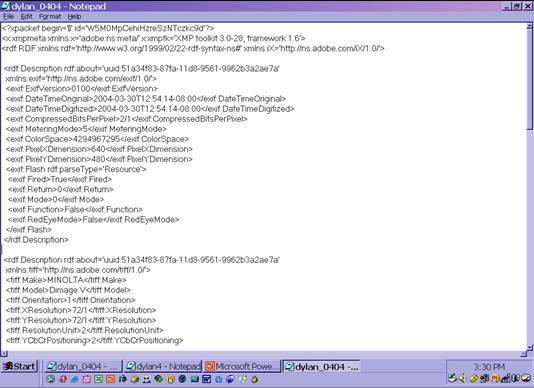
- Embeds metadata as an XMP packet (XML)
- Access for viewing / editing metadata
- Adobe Photoshop File Info
- Option to customize metadata set
- Adding fields through a custom panel
- Export metadata
- Individual file: “Save” on File Info – Advanced Screen
- Batch: Script and Droplet
- Creates XML file
|
|
16
|
|
|
17
|
|
|
18
|
- On Z39.87: Glass half full / half empty
- 45-60% overlap on M/MA
- Some extraction tools available
- Theory vs Practice
- Not all possible fields of a specification used by capture devices
- Example: Kodak ProBack 645 captures 9 of 38 NISO M/MA elements (23%)
- But, potential changes by some device manufacturers
|
|
19
|
- IT10 Meeting Update
- TIFF – no hope for aligning header structure with NISO Z39.87
- JPEG 2000 – promise of the future
- additional Technical Metadata in codestream
- IT10 estimates: 95% overlap with NISO Z39.87
- RLG working with Kodak to update mapping
- JPEG2000 profiles encouraged
- Raw formats are new possibility
|
|
20
|
- Leveraging
- “Scorecard” for Tools
- Communicate to community options for technical metadata extraction
- Adobe XMP custom panel
- JPEG 2000 revised mapping
- Expanding to NISO Z39.87
- Keep communicating with industry
- Insert ourselves into JPEG 2000 standardization process
|
|
21
|
- Automatic Exposure homepage
- Whitepaper, Meeting Minutes, etc.
- http://www.rlg.org/en/page.php?Page_ID=2681
- Questions?
- Robin.Dale@notes.rlg.org
- Guenter.Waibel@notes.rlg.org
|

 Notes
Notes